Blog Overthinking How to Stop Overthinking
How to Stop Overthinking7 Small Moves That Quiet the Loop Tonight
To stop overthinking, give the thought a name, a time and a test. Write the worry on one line, move it to a 20-minute slot later, and check tomorrow whether it came true. Most worries do not.
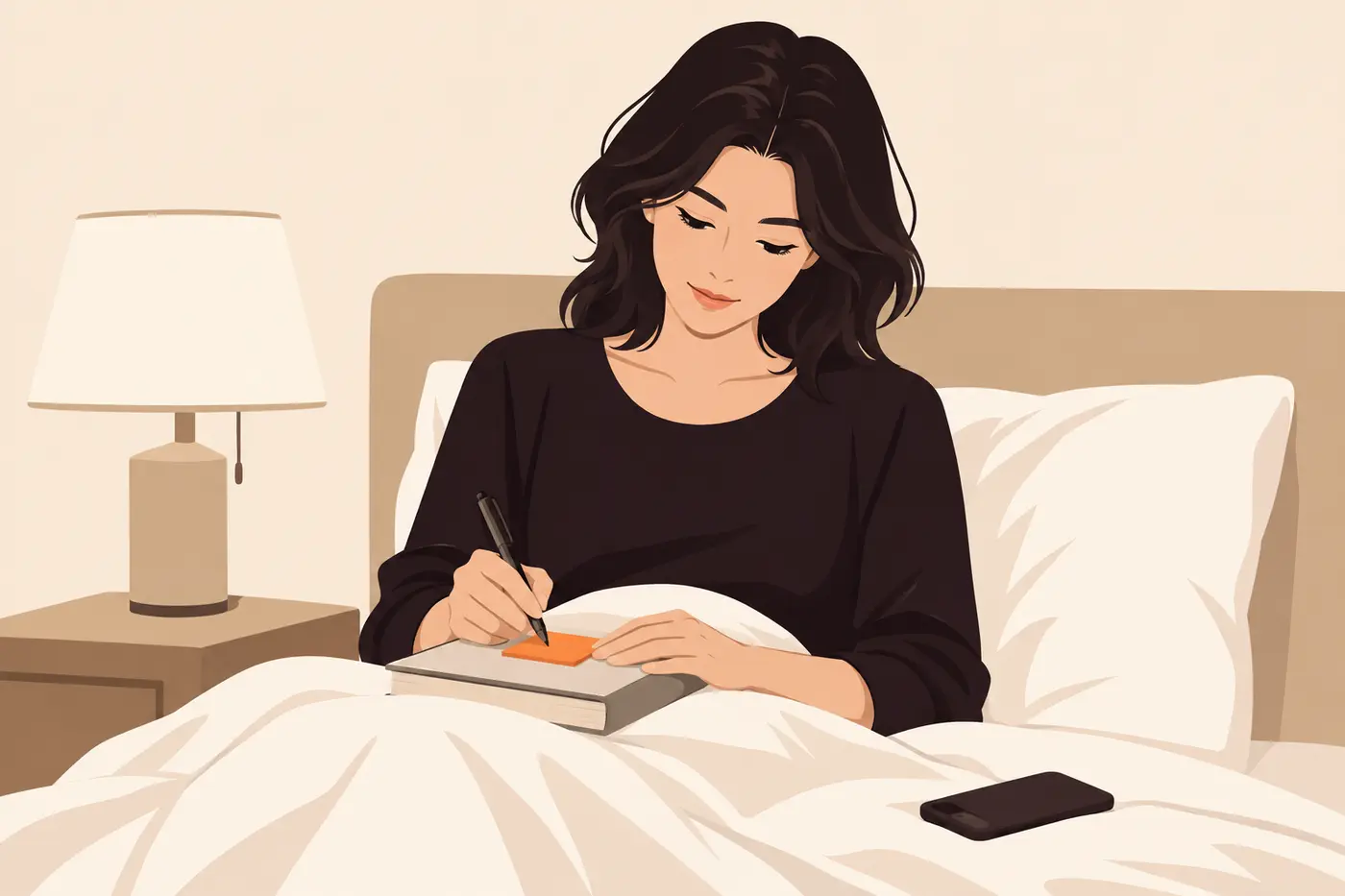
Overthinking is the same 4 thoughts going round
You sent a message and no answer came. Since then you have read it back, pictured his face as he read it, and typed a follow-up you deleted.
Each lap feels like progress. You find a new angle, a new reading of a word, a new reason. Then you land back where you started, a little more tired.
Overthinking is thinking that circles without arriving. It replays what already happened, or it rehearses what has not, and it never hands you a step.
“A loop feels like work, and it never ends in a decision.”
For a lot of women it starts with a person. A late reply, a short answer, a face that changed at dinner. The mind fills the gap with a story and then checks the story again and again.
Overthinking a person usually travels with these 3.
 Anxious attachmentRead a slow reply as a verdict on you
 Not saying what you thinkRehearsed a sentence 10 times and never said it
 People pleasingReplayed a yes for days, looking for the mistake
 Accepting breadcrumbsStudied one small message like it was a letter
If the loop is about a text, the hour after he leaves you on read has its own page. This one covers the loop itself, wherever it starts.
How do you stop overthinking?
You stop overthinking by giving the loop edges. Name it as it starts, write the worst case on one line, and give it a short slot later in the day. Then do something with your hands, and check the forecast the next day.
- 1Name it in 2 words as it starts“Rereading again.” “Rehearsing again.” Putting a feeling into words quiets the alarm a little, and it reminds you that a loop has begun.
- 2Write the worst case on one line“He is annoyed with me.” A thought on paper has an outline. In your head it keeps growing new rooms.
- 3Give it a 20-minute slot laterPick a time and a chair. When the thought comes back before then, tell it the time. In one trial a daily worry slot cut worry and helped sleep in 2 weeks.
- 4Ask what answer would settle itIf you can name one, go and get it. If no answer would ever be enough, you have found the loop, and more thinking will not close it.
- 5Put the phone across the roomRereading a thread is the loop with a screen attached. A few metres of floor slows the next lap down.
- 6Give your hands 10 minutes of somethingDishes, a walk to the shop, a shower. The body moving pulls attention out of the replay faster than reasoning does.
- 7Check the forecast the next dayRead the line you wrote. Did it happen? Mark yes or no. After a few weeks the marks tell you how far to trust the next forecast.
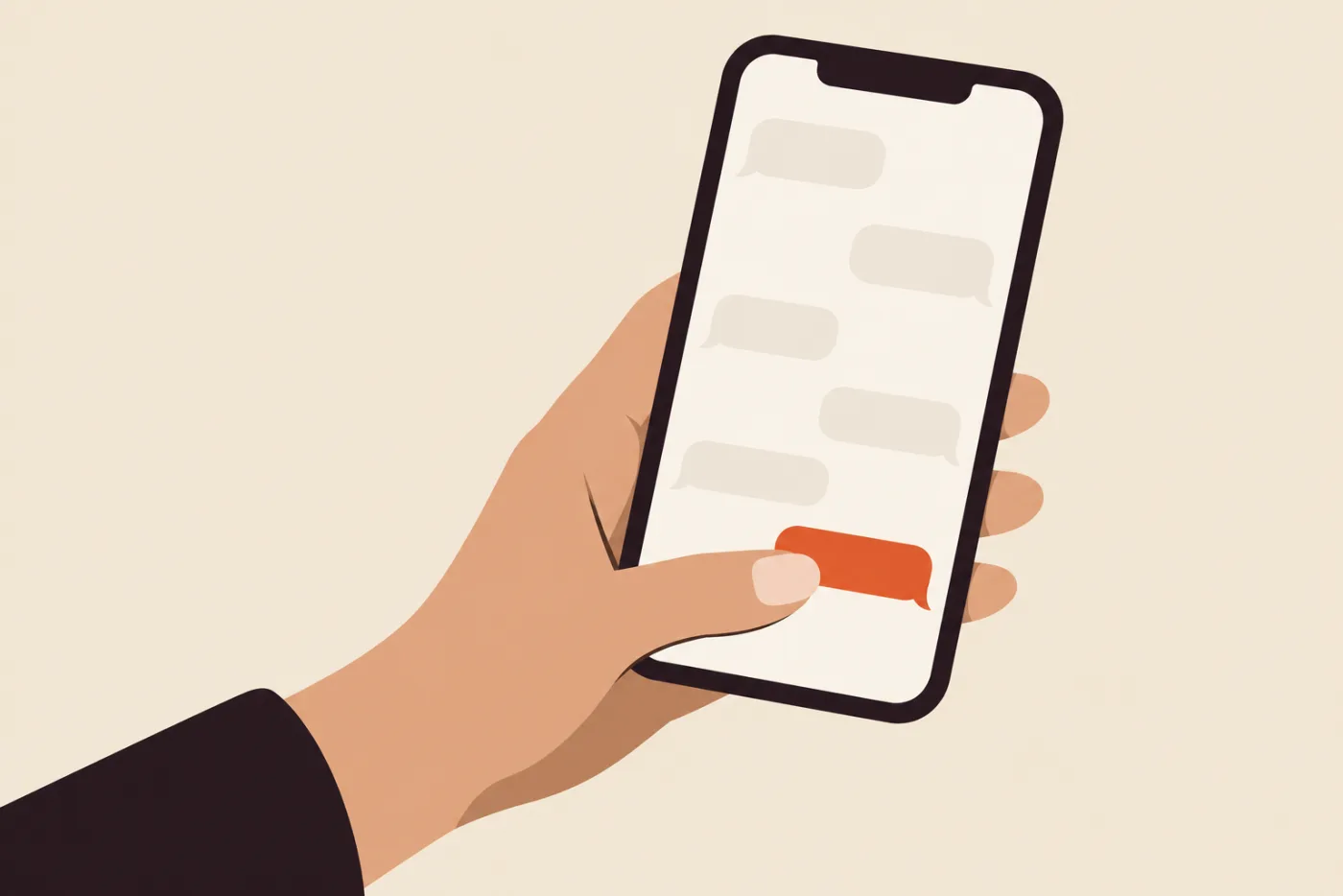
A loop about one person often belongs to an older habit with people in general. Find out if yours does.
Show me what the waiting is aboutWhich of these happened to you this week?
Why do I overthink everything about one person?
You overthink one person because your body learned early that a quiet gap could mean losing someone. So a late reply reads as danger, and the mind keeps working the problem to stay safe. That habit has a name: anxious attachment.
It got trained somewhere. Warmth that came and went. A parent whose mood you had to read before you spoke. The skill kept you close to people, and it kept you up at night too.
-
A set daily slot for worry cut worry and helped sleep
People who worried a lot kept their worry to one 30-minute window in one place each day, for 2 weeks. Compared with a control group, their worry, anxiety and insomnia all fell further.
McGowan and Behar, 2013
-
Naming a feeling in a word calmed the brain’s alarm
In a brain scanner, people who put a word to an emotional face showed less activity in the amygdala, the part that sounds the alarm, than people who only looked.
Lieberman and colleagues, 2007
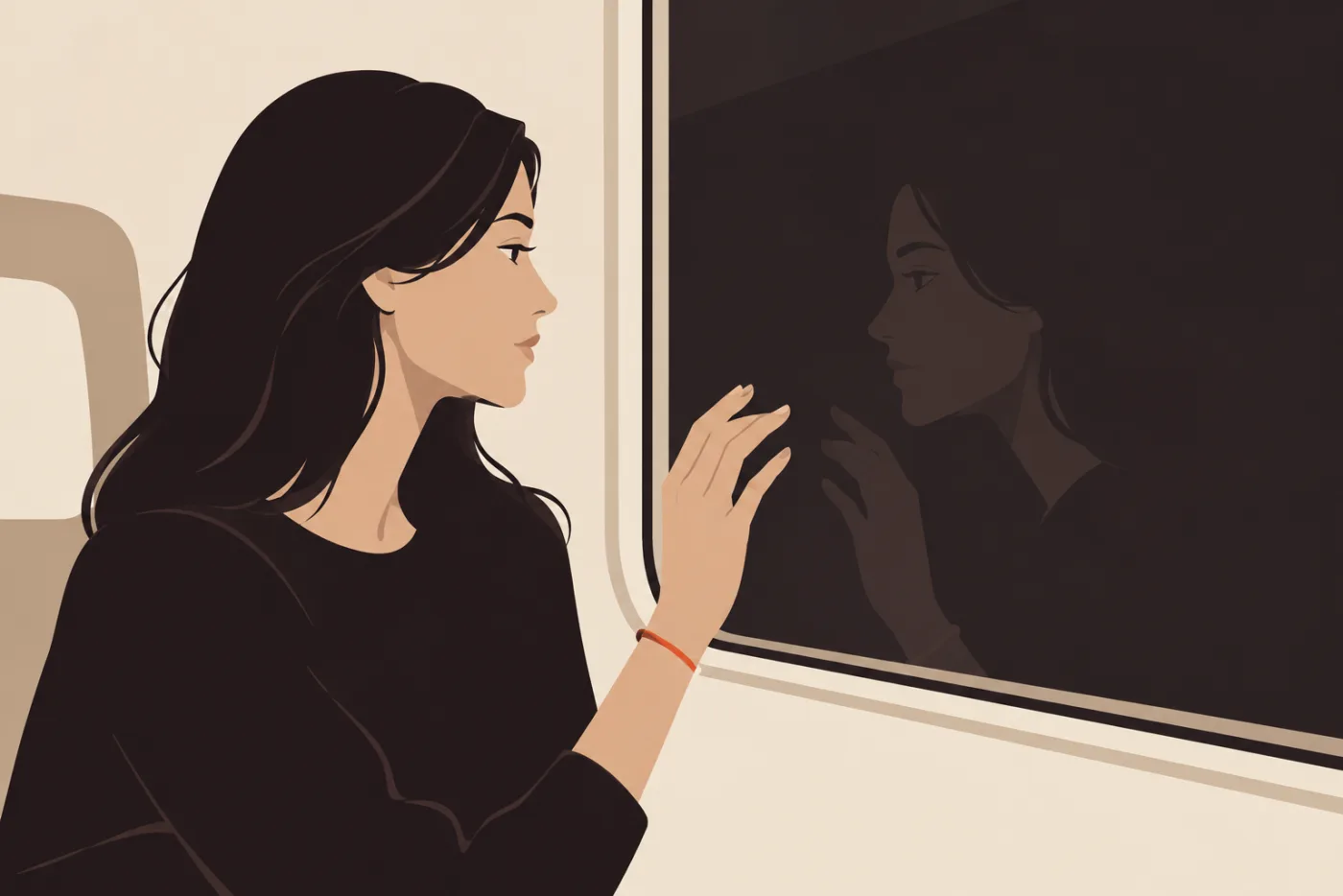
Most of what you forecast at night never arrives
Overthinking feels like getting ready for the worst. When people wrote their worries down and checked them later, almost none came true.
Of worries that never happened
29 people with generalised anxiety logged their worries and checked each one afterwards. 91.4% of the worries did not come true. The most common score for one person was 100%: not one worry arrived.
LaFreniere and Newman, 2020, Behavior Therapy, 29 people.
Settle on the move before the next loop starts: when I catch myself rereading, I write the worry on one line and check it tomorrow.
A thought that ends in a step is problem solving
Thinking a problem through ends in a decision. You send the text, you ask the question, you let it go. A loop ends where it began, and asks for one more lap.
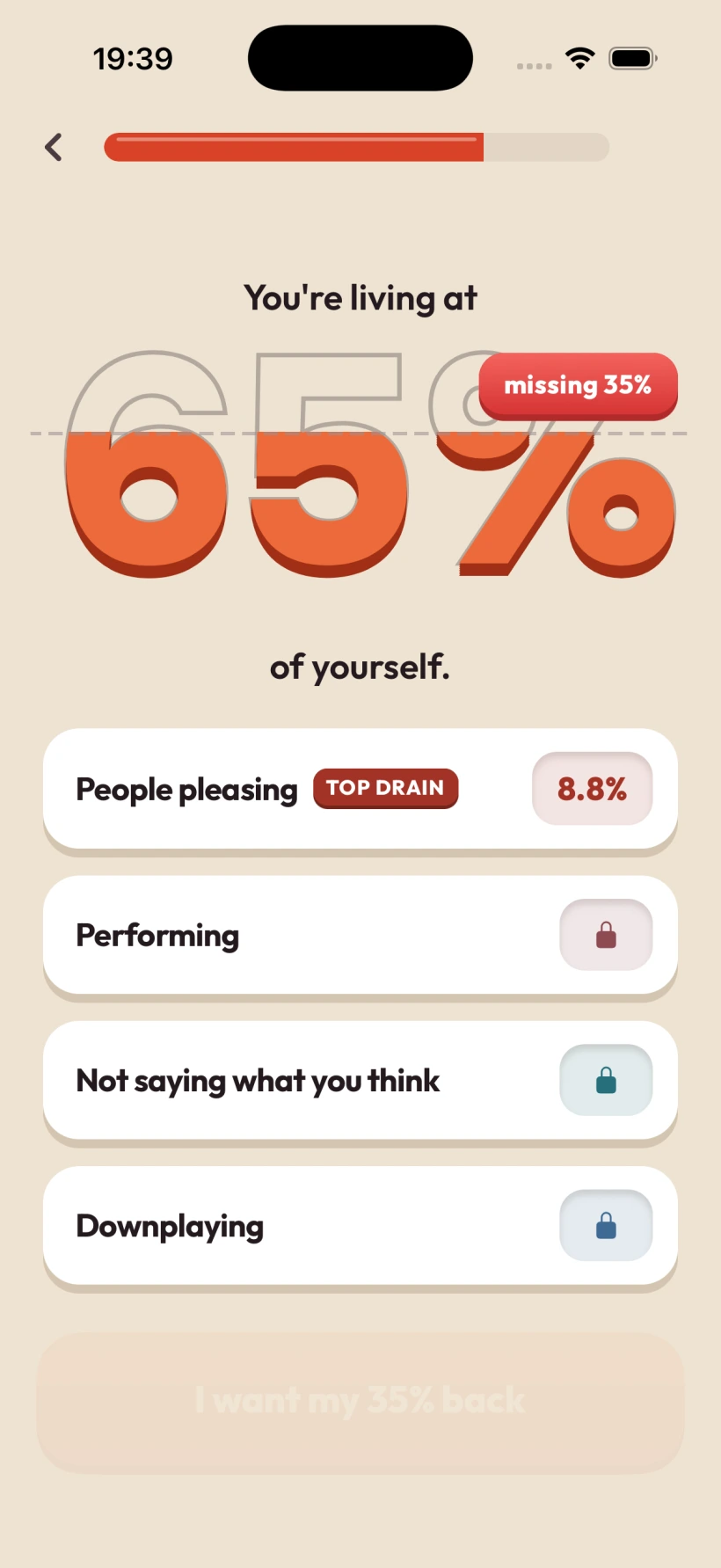
Glissa is an inner glow up for women. You start glowing by dropping the old patterns that make you shrink, and reading a silence as a verdict is one of 11.
Each day you spend about 30 seconds tapping what happened, the reread and the deleted draft included, and you see which pattern was running. Each week brings one small dare from your own answers. The first ones are as small as sending the text once and putting the phone down. Every dare you take gives a piece of you back.
A few questions show whether the waiting and the rereading come from anxious attachment, and where to start.
Give me my first dareQuestions
Will I always be an overthinker?
The habit loosens with practice. A loop you name, write down and postpone loses some of its pull each time.
What if the worry is right this time?
Then you will find out tomorrow and deal with a real thing. Writing it down costs you nothing, and the checking keeps an honest score.
Do I need therapy to stop overthinking?
Therapy helps if the worry fills your days or you cannot sleep. The moves above work alongside it, in the moments between sessions. If you feel unsafe, call or text 988 in the US.
Is overthinking just me being careful?
Careful thinking finishes. You act on it, or you decide to drop it. If you have had the same thought 20 times with nothing new in it, it has stopped protecting you.
The next quiet evening can stay quiet
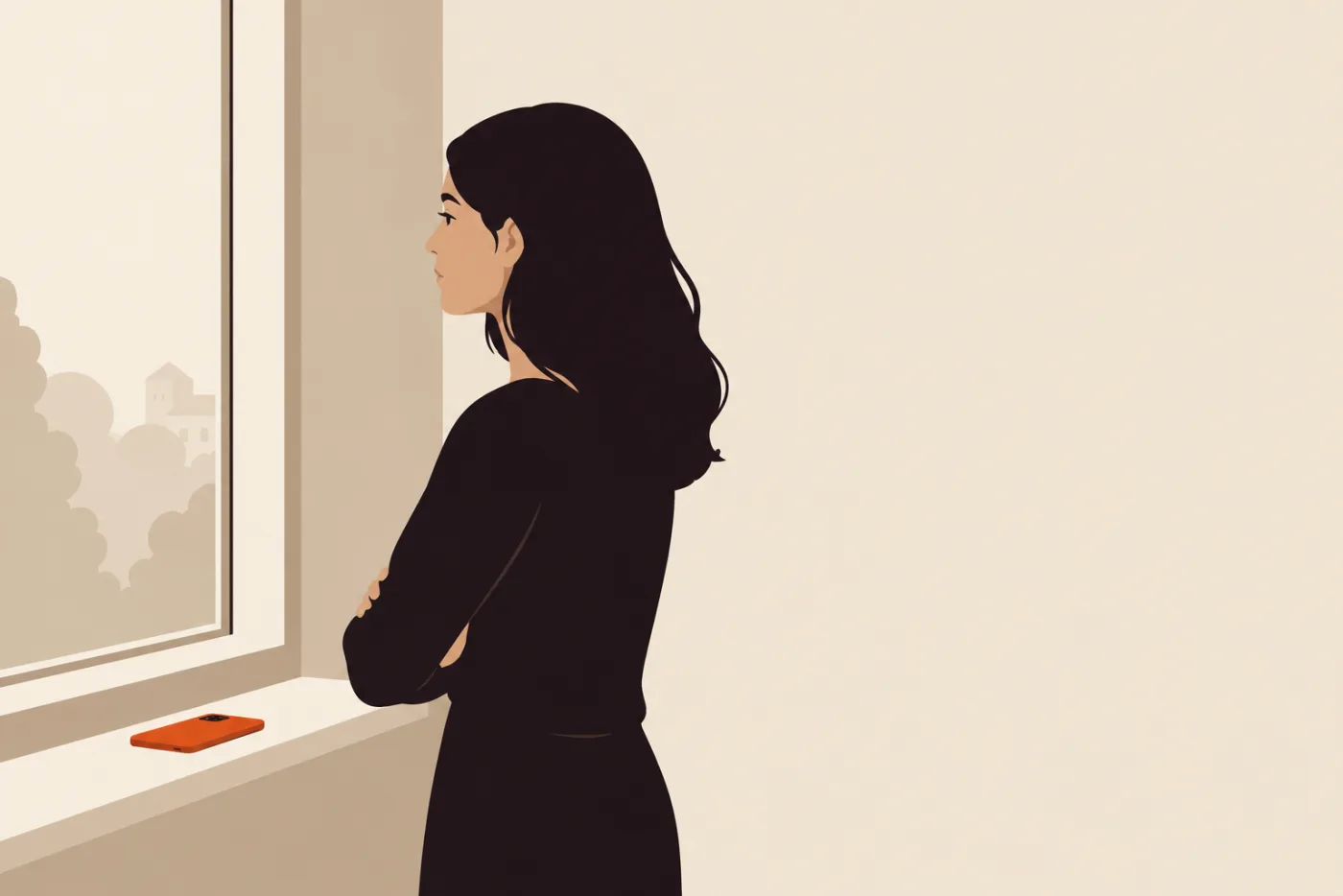
The message sits there unanswered. You read it once, write one line, and go and make tea. Later the reply comes, or it does not, and your evening was yours either way.
You can catch the loop in Glissa with 30 seconds of tapping a day, and drop the pattern behind it one small dare a week.
The glow up that starts on the inside
Get back the parts of you that you filed down to keep everyone else comfortable. 30 seconds a day, all the way back to 100% and past it.
Download Glissa for iPhone $4.99 a month, billed as $59.99 a year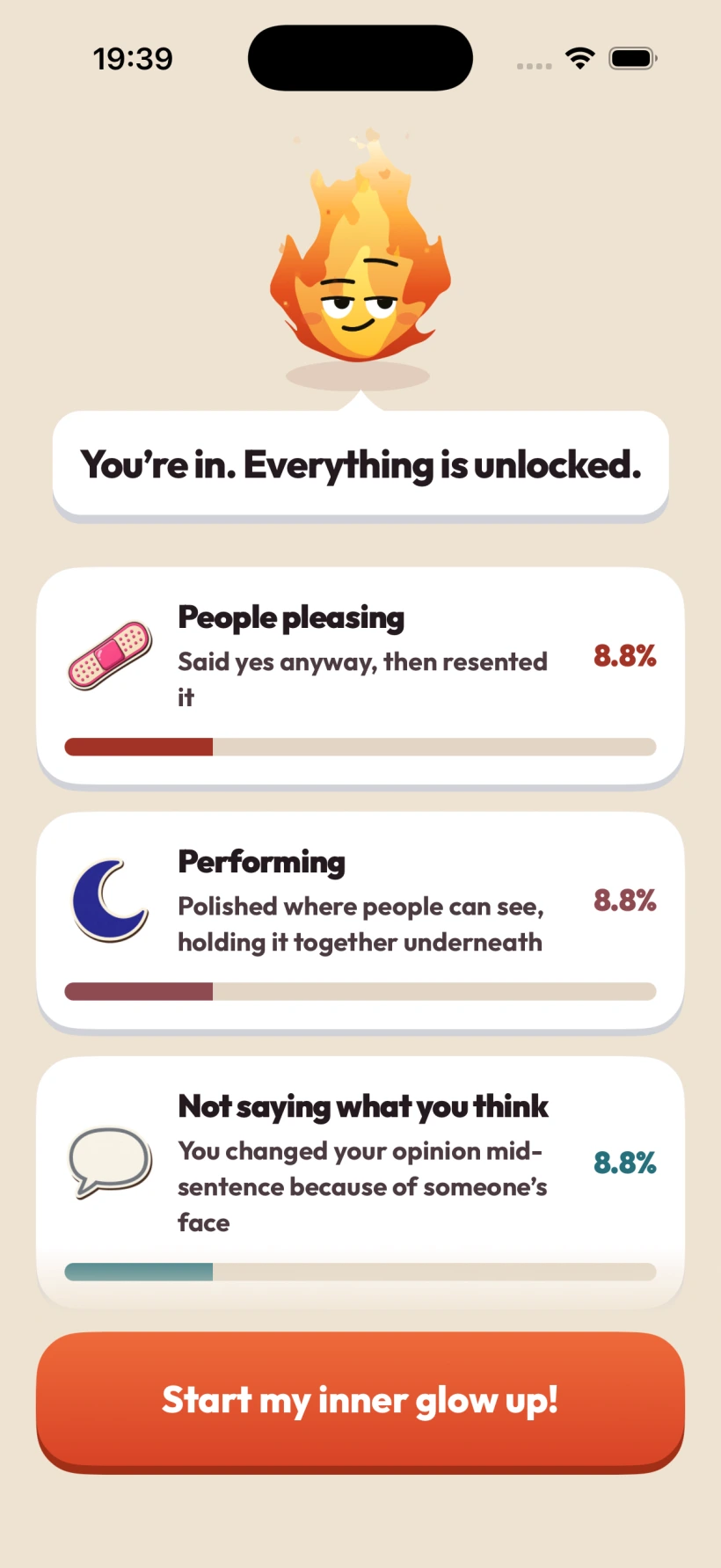
Keep reading
All of it →
People pleasing
6 Best Self Improvement Apps for Women in 2026
A self-care pet, a routine coach, 2 meditation apps, a habit game and an inner glow up, ranked on what feels different by week 4.
Kayleigh Brennan · 7 min read
Journaling
30 Shadow Work Prompts, and What to Do With the Answers
Shadow work prompts sorted by habit, each about one real moment from your week, and the one small move to make with your answers.
Sophie Klein · 8 min read
Finding a therapist
Can’t Afford Therapy? 6 Ways to Get Help for Less
Start with what is free, then ask about sliding scales. 6 ways to get help for less than one private session, each with its price and its trade-off.
Nadia Ferreira · 8 min read