Blog › People pleasing
How to stop being a people pleaserwhen your thumb has already typed yes
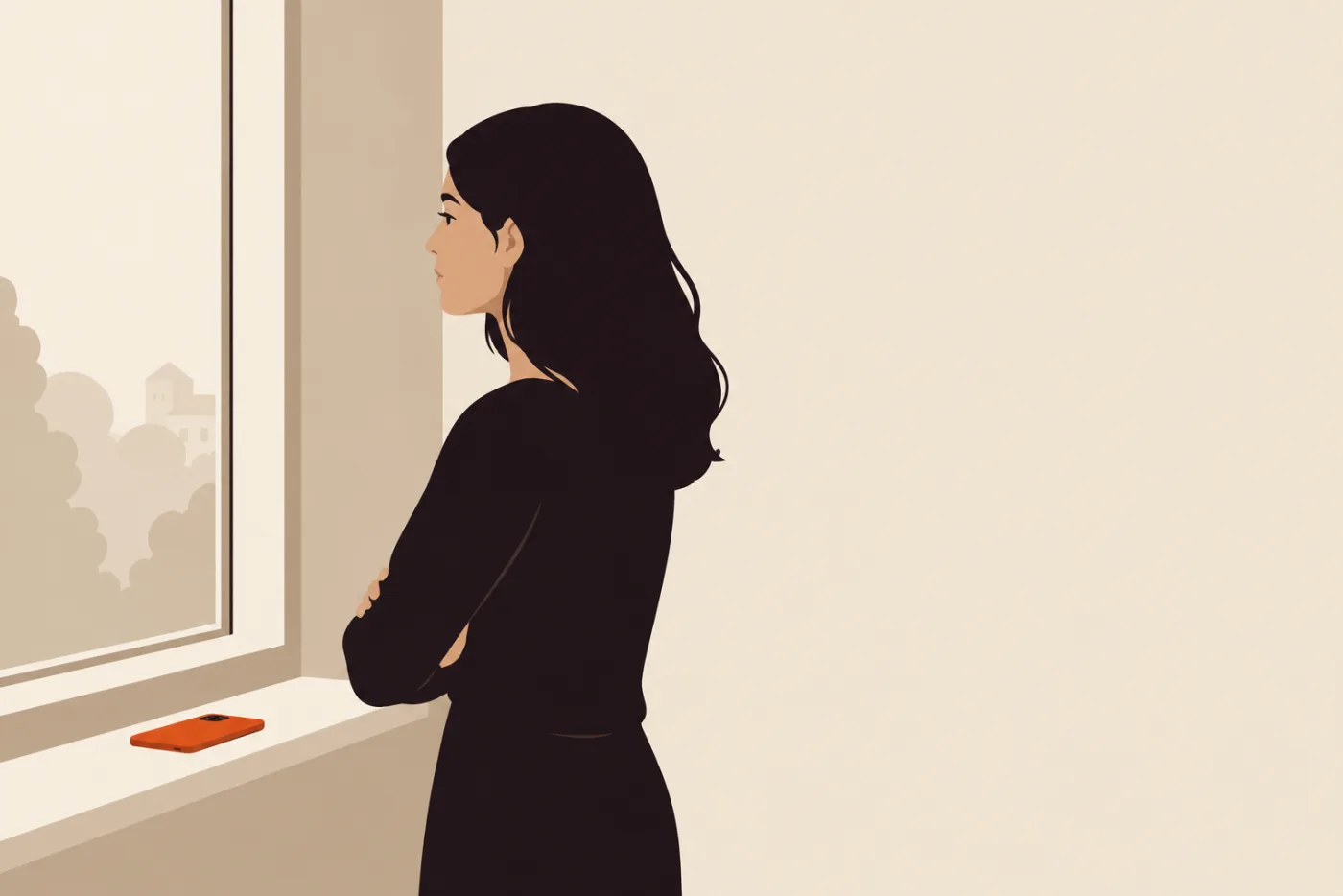
You agreed on Tuesday. It is Saturday now, and you are in the car with a gift you did not want to buy. The next one is catchable.

Your yes arrives before your opinion does
It is Tuesday, 4:12pm. Your cousin messages about Saturday. An engagement brunch, an hour each way, a gift you have not bought.
You type yes. Then an exclamation mark, to be safe. The phone goes face down. Something small goes flat in your chest, and you ignore it.
Saturday, 9am. You are in the car. The gift sits on the passenger seat in a bag you paid extra for. You knew on Tuesday.
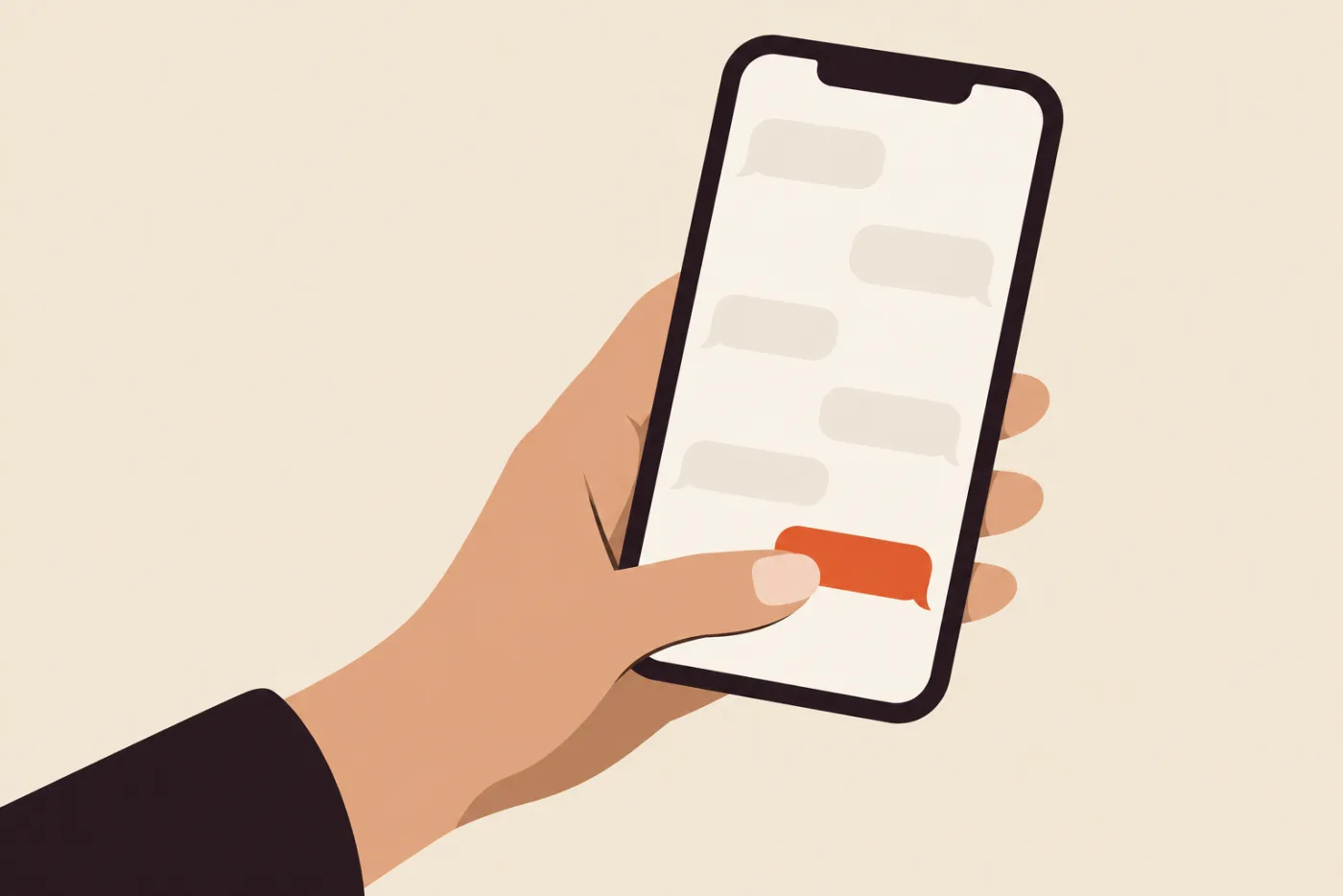
The gap between the ask and your answer is tiny. Nothing you would call a decision happens inside it. The yes comes out of the same system that flinches at a loud noise. Fight, flight, freeze, and fawn. Fawning is the one that looks like manners.
Under the word, you priced a no. A face changing. Somebody cooler with you next month. A friendship going thin by spring. The price arrives fast and whole, and it feels like knowledge.
You have run that forecast for years without once testing it. A prediction you always obey cannot be tested. Say yes every time and the no never happens, so its cost stays unmeasured. Your head fills the blank with the worst version it can build, then treats that version as data.
“You are dodging a disaster you have never once seen.”
It got trained somewhere. A house where a mood could turn. The parent who softened when you were good. One no at a first job, remembered for a year. Agreement ended things, so your body kept the move.
One Saturday is a Saturday. The pattern is the Saturdays stacking up. The project you took on at 6pm. That flat you never said you hated. Calls answered at 11pm.
It rarely arrives alone. Three habits sit closest to it, and Glissa scores all four every week.
 People pleasingSaid yes anyway, then resented it all week
 Not saying what you thinkChanged your opinion mid-sentence, because of a face
 DownplayingMade something you like sound like nothing much
 Being everyone’s therapistThe group chat therapist who had nobody
Most advice about how to stop being a people pleaser hands you a script. Scripts arrive after the answer has formed. What you can reach is the moment before it, while your thumb is still moving.
The first two steps change nothing about your behaviour
Run them in order. The first two ask you to change nothing at all, only to watch.
- 1Count your yeses firstFor seven days, mark every time you agree to something you did not want. Change nothing else. You are learning your own rate.
- 2Write the forecast downBefore you answer, name what you think a no will cost, in detail. She will think I am selfish and go quiet for a week. Vague fears cannot be proved wrong.
- 3Keep one stalling line readyPick a sentence and repeat it until it is boring. Let me check my week and come back to you tonight. That buys an evening for your real answer.
- 4Name the moment in advanceWrite the situation and the response together, before either one shows up. When someone asks me on a Friday night, I answer on Saturday morning.
- 5Say one cheap noRefuse something that costs you nothing. An extra drink, a group photo, the coffee run. I cannot do Saturday is a complete sentence, and a no plus a paragraph is a negotiation you opened yourself.
- 6Let the guilt passGuilt arrives after the first real no and feels like evidence you did wrong. Do not act on it for twenty minutes. It fades without your help.
- 7Re-score at week ninePut what you predicted next to what happened, in writing. Answer the same ones nine weeks later. Memory will tell you nothing changed. Memory will be wrong.
Give each one a week. Seven weeks is short for something you have been doing since you were nine.
Nobody has to hear about your childhood, and none of this needs a speech. Your nervous system needs proof that a no can happen and the room stays standing.
It ends by handing you one move for this week, taken from your own answers.
Give me my first dareWhich of these was you this week?
You cannot swap a habit you have not caught yourself doing
Two findings do the work here, and neither was run on people pleasing.
-
Awareness first, replacement second
Habit reversal, the method used on tics and nail biting, has two essential parts: catching the thing while it happens, and a competing response to do instead. The catching is taught first.
Woods and Miltenberger, 1995
-
Name the moment and the words together
Pooled across 94 studies and 8,461 people, deciding in advance when and where you would act had a medium to large effect.
Gollwitzer and Sheeran, 2006
Boundaries come after noticing, which is why step one is a tally and step five is a sentence. Write the situation and the response together: when my manager asks at 5pm, I say I will look first thing.
Habit reversal was built for nervous habits. Neither study was run on women who cancel their own plans. The mechanism carries; the population is ours to test.
A journal remembers, a therapist answers back, and Glissa keeps score every week
Three things help here, and we make one of them, so read this knowing that.
A journal is free and it has no floor. On a good week you write four pages. On the week you need it you write nothing, because the days worth looking at are the days you least want to look. Your memory is a biased judge. It keeps the one time someone went cold and files the nine fine times under nothing happened.
Therapy is the strongest of the three and the slowest to arrange. A trained person watches your face and asks the question you have been steering around. It costs a session’s price a week and it runs on someone else’s calendar. If a no makes your chest tighten in a way that frightens you, book that.
| Compared on | glissa | A journal | Therapy |
|---|---|---|---|
| Cost | $4.99 a monthbilled as $59.99 a year | Free | A session a week |
| Effort | Thirty seconds of tapping | Writing, on a good day | An hour, their calendar |
| Who reads it | Nobody. The app scores it | You, eventually | A trained person |
| Week 9 vs week 1 | The same questions | Only if you reread it | Your therapist remembers |
| Strongest at | Catching it as it happens | Getting it out of your head | A pattern doing real damage |
The orange column is ours. Day 30 retention on mental health apps: Baumel and colleagues, JMIR, 2019
Glissa is an iPhone app doing a smaller job. A short test gives one number for how much of you is showing. Eleven habits sit underneath it, people pleasing among them. All eleven get re-scored every week, so week 9 sits beside week 1 without you remembering a thing. You tap. The only place to type is one optional box called the vent.
- People pleasing26% out there
- Not saying what you think7% out there
- Being everyone’s therapist7% out there
- Peace feels boring7% out there
Baumel and colleagues found day-30 retention on mental health apps very low. Almost everyone is gone inside a month. We built for thirty seconds a day because of that number, and we will not claim we have beaten it.
Glissa has no users to point at. No ratings. No testimonials, and we will not borrow anyone else’s. What we have is the mechanism above, and whatever your own nine weeks show you.
Lose the habit. Become magnetic.
Get back the parts of you that you filed down to keep everyone else comfortable. It starts this week, with one small dare.
I want to know my numberRude is a tone, and you get to pick a warm one
Kindness has a choice inside it. You weigh the ask, you decide, you give. People pleasing skips the weighing, and the bill arrives at 11pm, alone.
Is saying no rude?
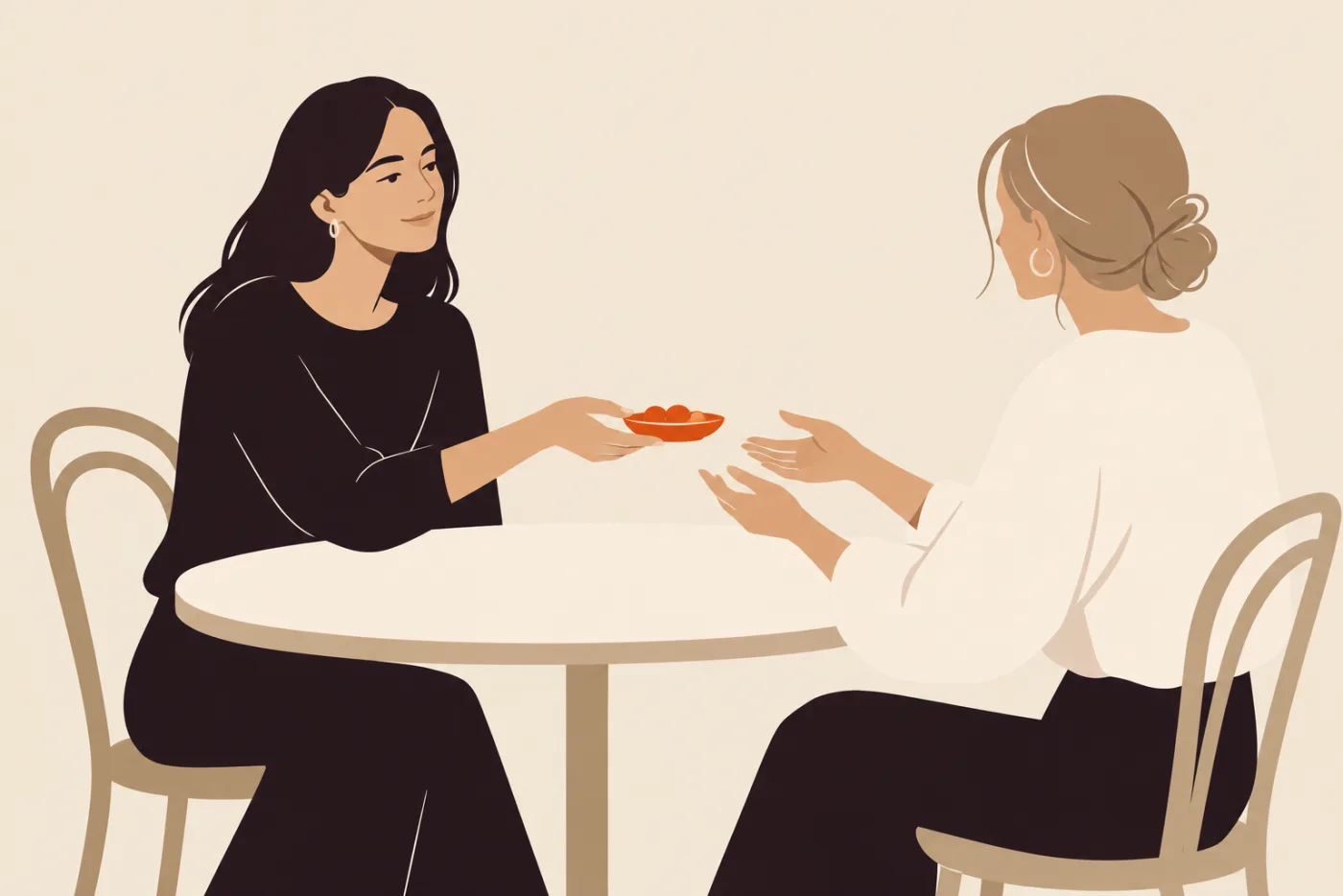
No is a fact about your Saturday. Rude is a tone, and you get to pick a warm one. I cannot make that, have a lovely time is a warm sentence. What you are bracing for is the pause afterwards. Someone may be annoyed with you, and their annoyance is theirs to carry. You will still be standing on Sunday, holding a Saturday you chose.
How long does it take to stop being a people pleaser?
Nobody honest will give you a date. Glissa gives you a unit of measurement. The same eleven habits are re-scored every week, so week 9 sits beside week 1 as a number. Counting takes about seven days before your own rate is visible on paper. Some weeks go backwards. Expect the pause before your answer to widen before the number moves.
What is fawning?
The fourth stress response, after fight, flight and freeze. Under threat some bodies attack, others go still, and some please. Fawning makes you agreeable, useful and quick to smooth a room. It works fast. The tension in the room drops, so your body keeps the move, long after the house where you learned it stopped existing.
What does Glissa cost?
$4.99 a month, billed as $59.99 a year. The test, your number and the first read of where you stand cost nothing, and the charge starts after that, billed as $59.99 a year through the App Store and cancelled there. A weekly option is $7.99 if you would rather not commit to the year. No ads, and nothing sold on inside it. If it charges you wrong or reads you wrong, tell us and we will sort it.
Is this therapy?
No. Glissa is not therapy and not a diagnosis, and it treats nothing. It is a weekly measure of eleven habits with one small dare cut from your own answers. You can have both, the room for the why underneath and the app for the weekly count. If you are in real distress, or this pattern is tied to something that happened to you, talk to a person. Tell us and we will point you to the help lines we keep.
Nothing dramatic happens in the version where this goes well
Go back to Tuesday, 4:12pm. The message arrives. Your thumb is already moving.
You do not deliver a speech, and your cousin hears nothing about your childhood. You type the boring line you practised. Let me check my week and come back to you tonight. Then you put the phone down and finish your evening.
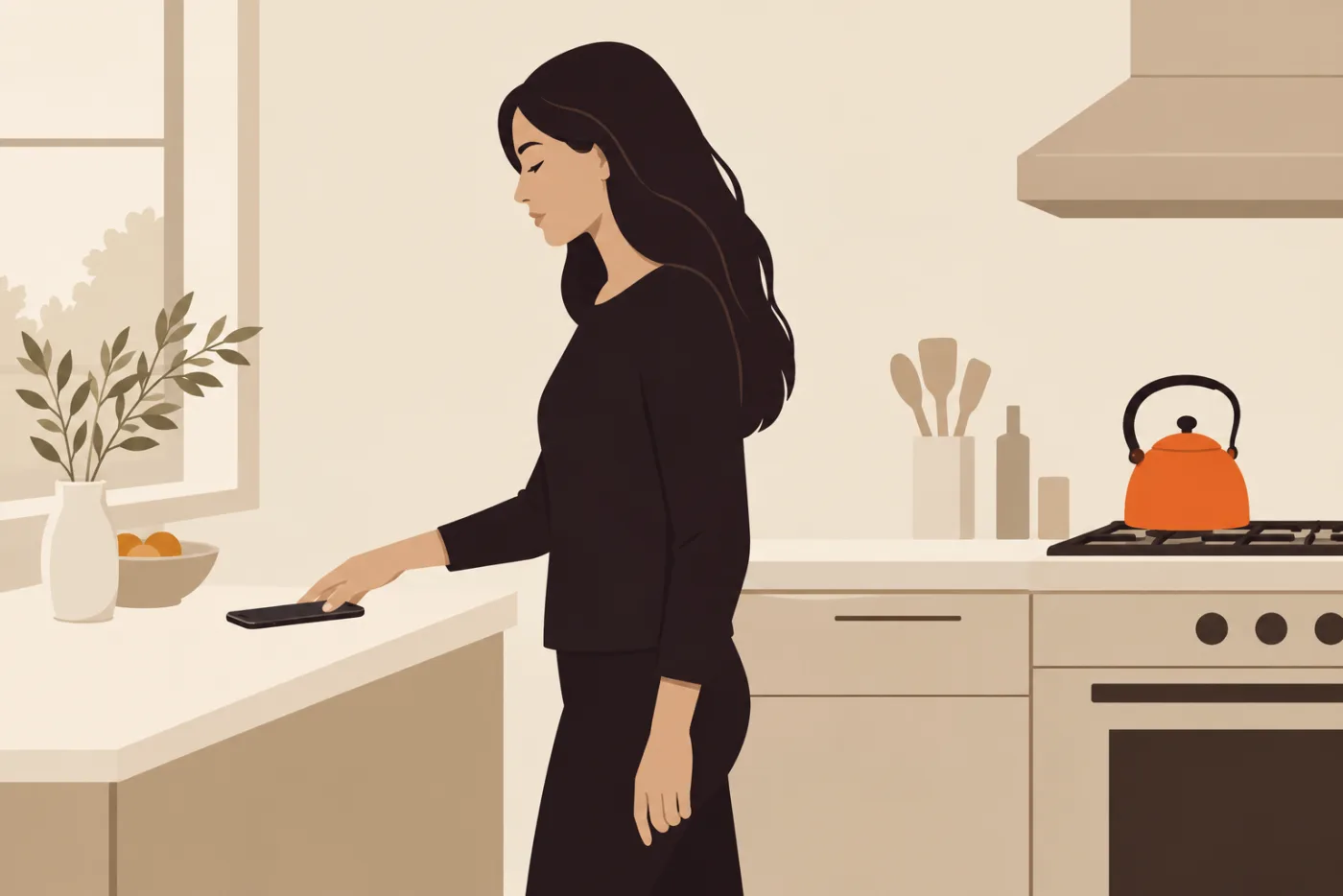
The first month is mostly catching it afterwards, in the car, twenty minutes late. Catching it late still counts as catching it.
If you want something counting while you learn, we built one. One number, eleven habits re-scored weekly, one dare before Sunday. Thirty seconds a day on an iPhone. If it reads you wrong, tell us.
The 11pm replay needs somewhere to go
Type the whole thing once, and get the rest of your night back.
$4.99 a month on iPhone, billed as $59.99 a year. A weekly option is $7.99. The test and your first number cost nothing. Not therapy, and not a diagnosis. If you are in a crisis, the app shows you who to call.
Keep reading
All of it →
Does journaling actually work?
Journals, workbooks, therapy, ours. The question is which one you still open in a month.
Seven compared · 9 min
Kind, or unable to decline
The two look identical from outside, which is why nobody close to you has ever said it.
The quiz · two minutes
The other ten, one page each
Hyper-independence, breadcrumbs, pulling away first, and the seven others written up one at a time.
The hub