Blog People Pleasing People Pleasing and Anxiety
People Pleasing and AnxietyWhy No Feels Scary, and 5 Ways to Calm It.
People pleasing and anxiety feed each other. Saying yes calms the fear for a moment, so the next ask brings the fear back, and the yes with it. Here is why a no feels scary, and 5 ways to calm it before you answer.
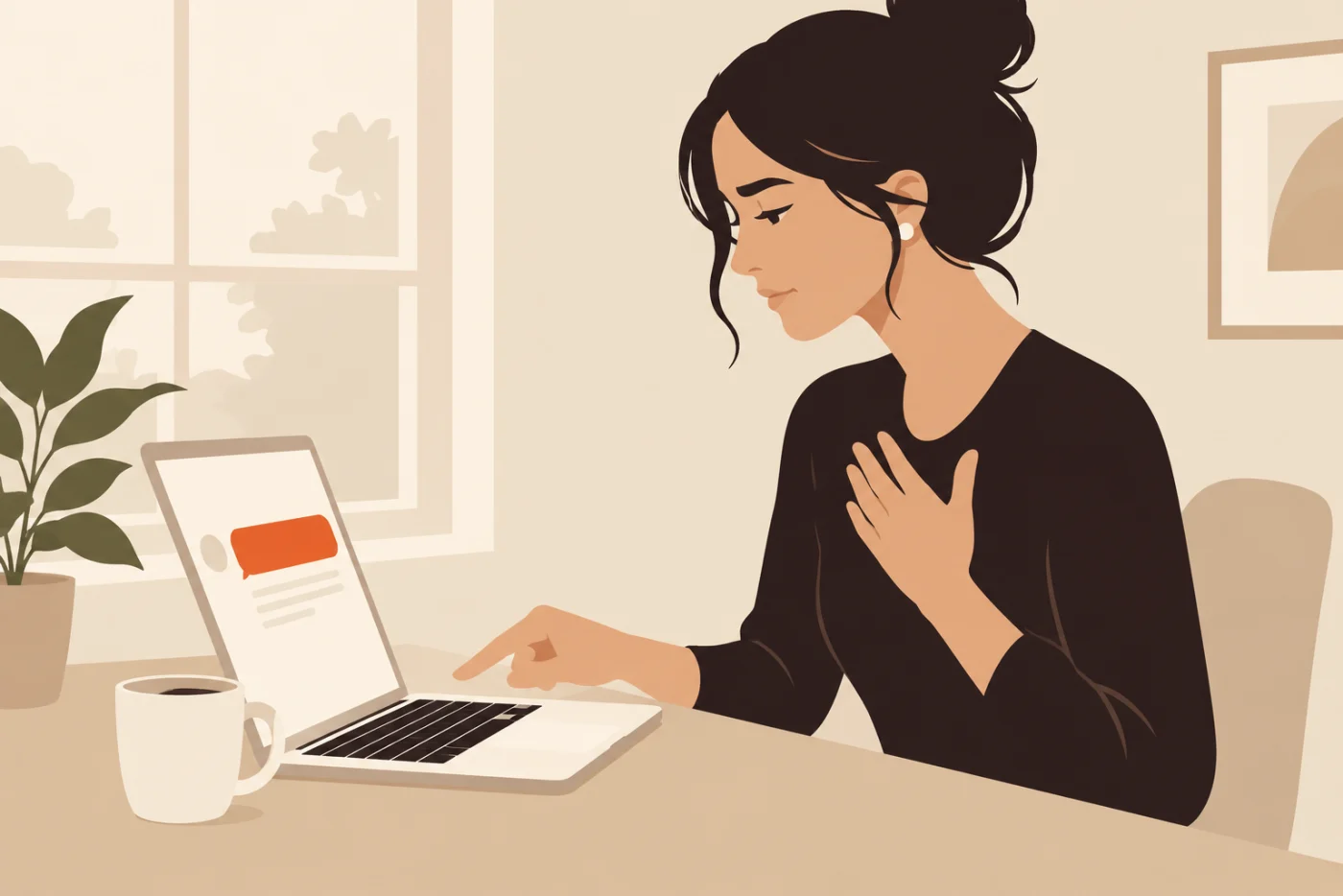
You say yes to make the fear stop
When someone asks you for something, a no can feel like danger. Your heart speeds up and your chest tightens. Saying yes makes it stop.
That relief teaches your brain that yes is the safe answer. The next ask brings the fear back, and the yes follows. Afterwards the worry often keeps going, as you replay what you said and wonder if they are upset with you.
“When I finally learned to set boundaries I felt like a villain.”
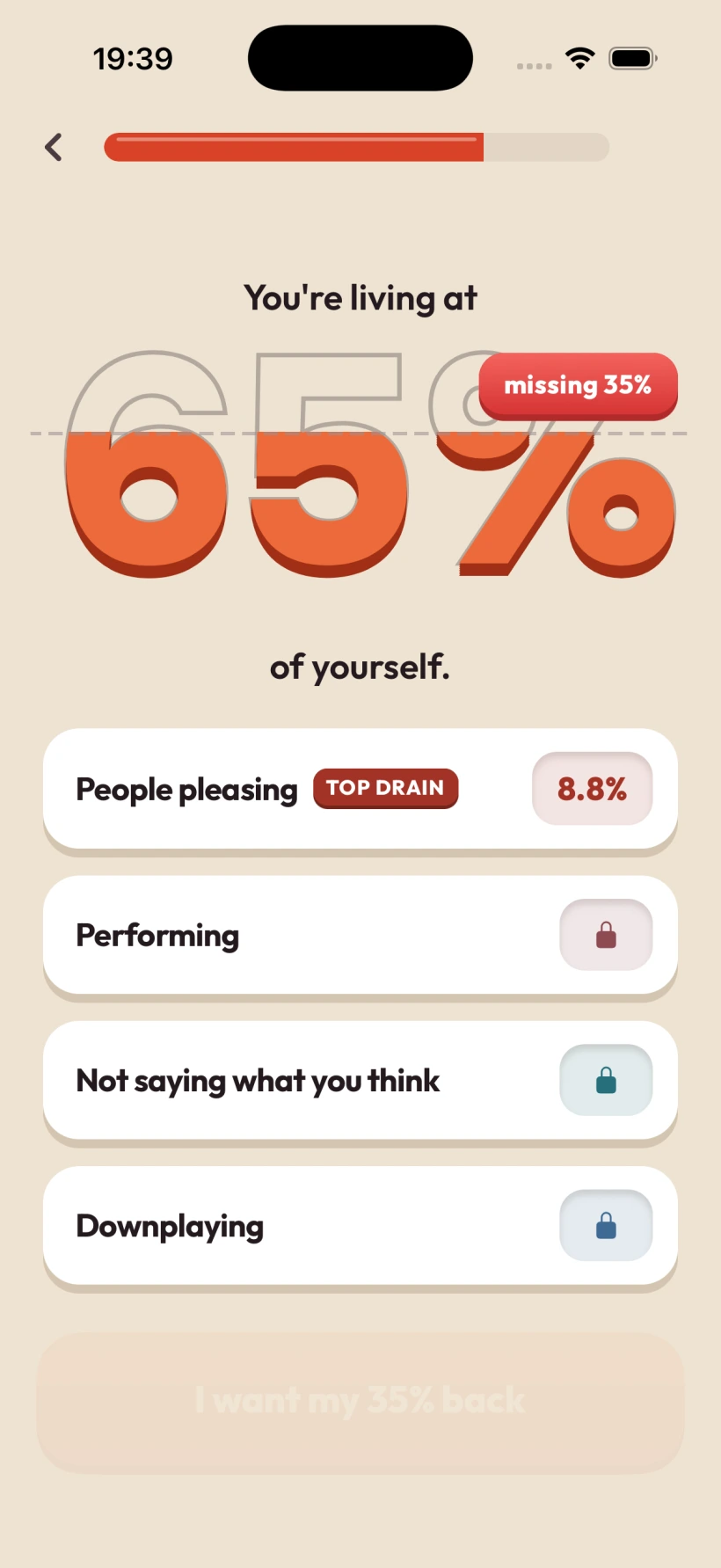
The fear behind the yes tends to bring these 3 with it.
 People pleasingSaid yes before you heard the whole thing
 Anxious attachmentReread a message for tone before sending it
 Not saying what you thinkChanged your opinion when their face changed
 DownplayingSaid it was nothing when it was something
The full method for stopping has its own page, and the anxious attachment page covers the fear when he goes quiet.
You may recognise these 5 signs that fear is deciding
2 or more of these, most weeks, and anxiety may be behind your yes.
- 1Your body reacts before you answerAs soon as someone asks, your chest tightens or your stomach drops.
- 2You rehearse a no and never send itWriting it is easy. Sending it feels impossible, so you send a yes.
- 3Silence after a no feels like angerA slow reply reads as proof they are upset.
- 4You replay conversations afterwardsHours later, you are still checking what you said.
- 5The yes is how you end the feelingCalming yourself comes first, and the favour comes second.
See whether the fear sits under people pleasing or under another of the 11 patterns, and start with one small dare.
Take the 90-second testWhy does saying no feel so scary?
Saying no feels scary because you expect it to land far worse than it does. In several studies, people who turned down an invitation expected the other person to be angrier and more hurt than they were. They also overestimated how likely the invitations were to stop.
-
People who said no overestimated the fallout
Across several studies, people who turned down an invitation expected the other person to be angrier and more hurt than they were. They also overestimated how likely it was that the invitations would stop.
Givi and Kirk, 2024
-
More people pleasing went with lower wellbeing
In a study of 2,203 university students in China, those with stronger people pleasing tendencies reported lower mental wellbeing.
Kuang, Li and Luo, 2025
How many people shared the fear
In a forum for women over 30, one woman asked how others got over the feeling of being disliked. 324 people upvoted the question.
One post in a forum for women over 30, its upvotes counted in September 2026.
Calm helps in the moment, and a no that goes fine helps the next time
A meditation app calms your body, and the ask still arrives. Therapy goes deep and takes time, and the habit shows up between sessions.
The fear eases when a no goes fine, again and again, so the practice has to happen in real asks. Glissa is an inner glow up for women: you drop the patterns that make you shrink. People pleasing and anxious attachment are 2 of the 11.
Each day you tap what happened for about 30 seconds and see the pattern behind the fear. Each week you get one small dare built from your answers, sized at first for a stranger or a text. Every small no you get through shows your body the fear was bigger than the fallout, and gives a piece of you back.
The yes may come from people pleasing, from anxious attachment, or from a third pattern. See which one leads for you, and start there.
Show me the one I keep pickingHow do you calm the fear before you answer?
You calm the fear in the minute after someone asks. Say you will check and reply later, so you are not answering on the spot. Breathe out slowly, twice. Write down what you expect to happen, then send a short no with no list of reasons.
- 1Buy yourself a pauseSay you will check and reply later. The pressure drops once you are not answering on the spot.
- 2Breathe out slowlyA long exhale can slow your heart rate. Do it twice before you reply.
- 3Name the fearWrite down what you expect to happen. On paper it usually looks smaller.
- 4Send a short noOne sentence, with no list of reasons. Reasons invite a debate.
- 5Check what happenedCompare the reaction you got with the one you feared. Most are milder.
Questions
Is this social anxiety or people pleasing?
They overlap. A fear that shows up in most social situations deserves a doctor or a therapist. When it shows up mainly around asks and favours, the steps here fit.
Will saying no make my anxiety worse?
The first few can feel worse. The fear usually fades with practice, as your body learns that nothing bad followed.
What if they really are upset?
Sometimes they will be, for a while. Their feelings are theirs to handle. In the studies above, people who were turned down were less upset than the person saying no expected.
Can an app help with anxiety?
Glissa is not an anxiety treatment. It works on the patterns behind the yes, with one small dare a week. If anxiety is running your days, see a professional.
You can start with one short no this week
Pick a small ask and answer it in one sentence. 7 short ways to say no are on their own page, and where the habit starts is covered too.
You can practise it in Glissa, with 30 seconds of tapping a day and one small dare a week.
The glow up that starts on the inside
Get back the parts of you that you filed down to keep everyone else comfortable. 30 seconds a day, all the way back to 100% and past it.
Download Glissa for iPhone $4.99 a month, billed as $59.99 a year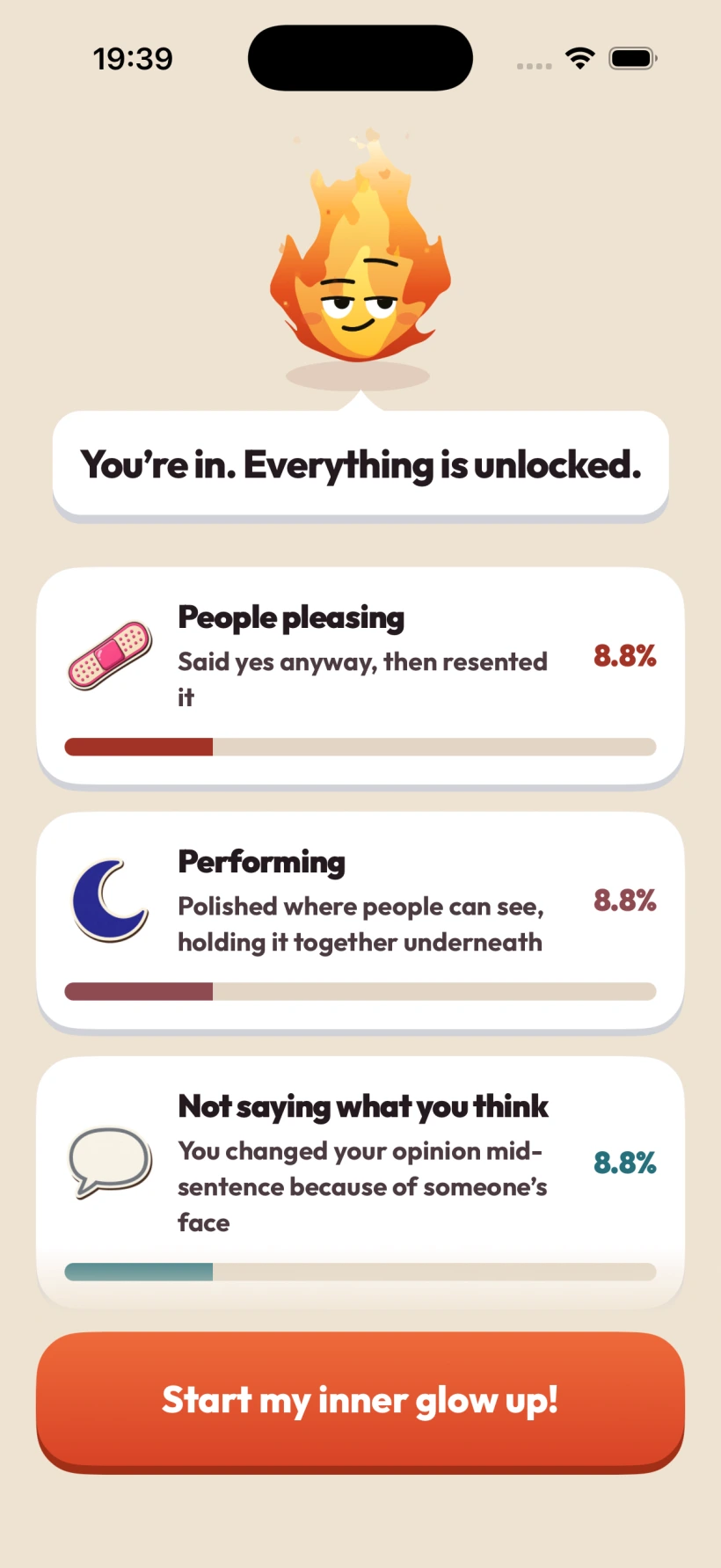
Keep reading
All of it →
People pleasing
6 Best Self Improvement Apps for Women in 2026
A self-care pet, a routine coach, 2 meditation apps, a habit game and an inner glow up, ranked on what feels different by week 4.
Kayleigh Brennan · 7 min read
People pleasing
Eldest Daughter Syndrome: 8 Signs, and How to Let Others Help
Eldest daughter syndrome is what growing up as the family’s second parent leaves behind. 8 signs it shaped you, and how to let others help.
Kayleigh Brennan · 8 min read
People pleasing
How to Stop Caring What People Think: 7 Steps to Care a Little Less
Most people notice you far less than you think, and like you more. 7 small steps to care a little less about what they think.
Meg Turner · 7 min read